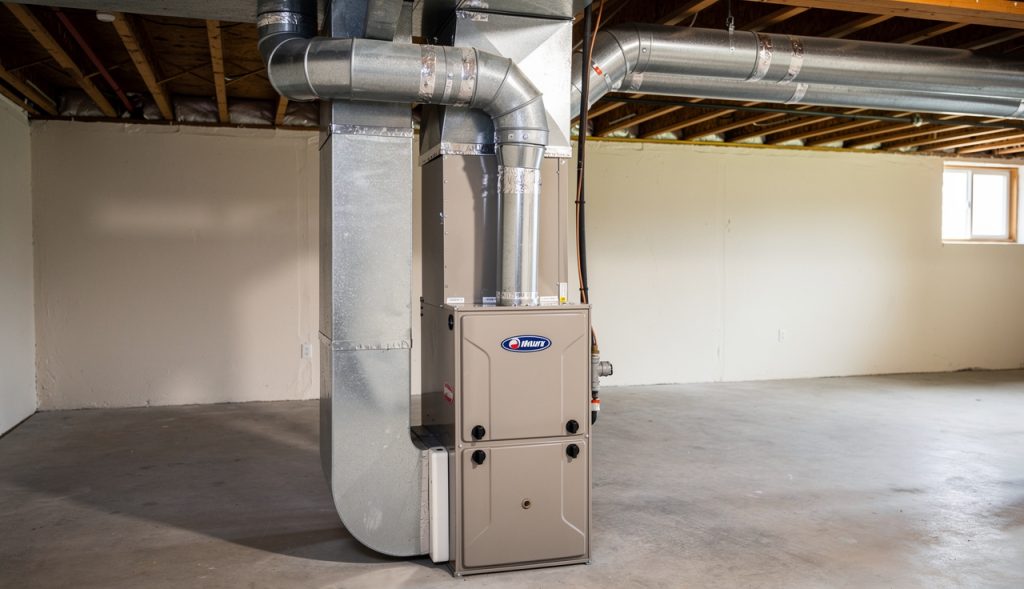
Furnace: Repair or Replace? Calculator
Old furnace, big repair quote? Run the numbers before you sign anything.
Open calculator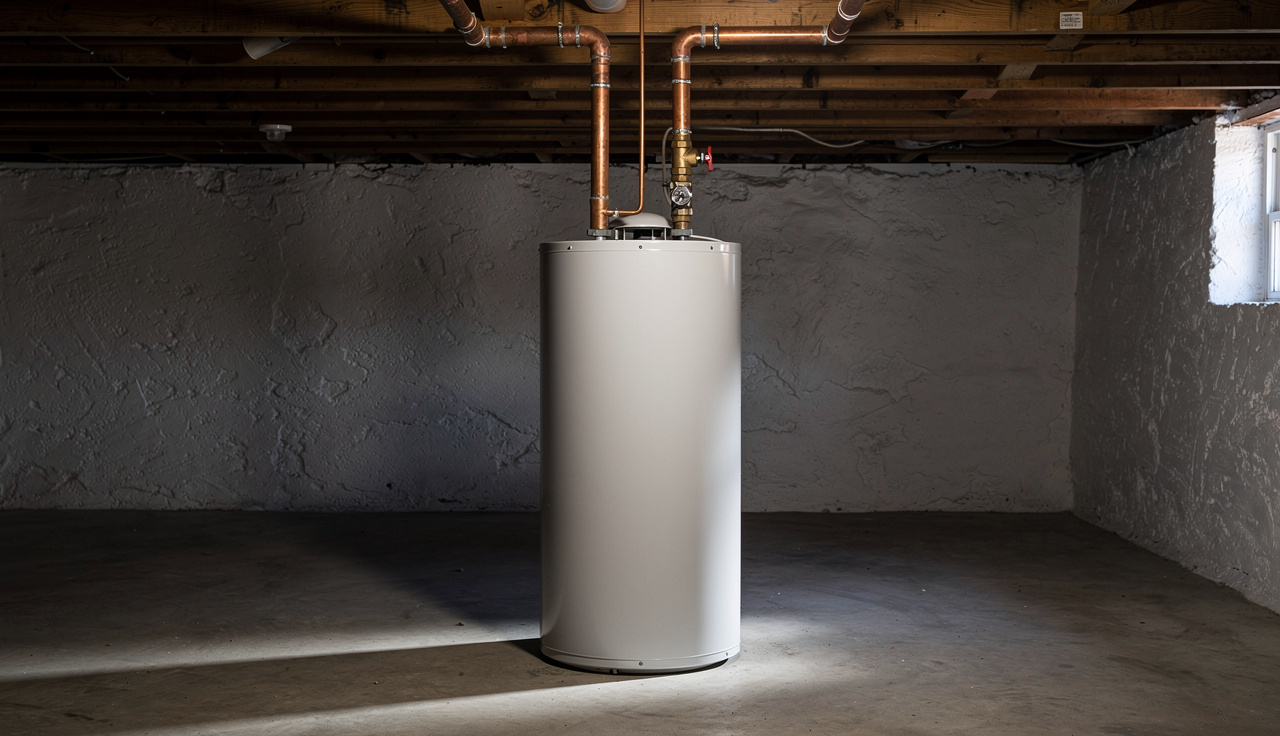
The calculator takes a few facts and gives you a straight answer on whether to repair or replace a water heater. You need three numbers: the age of the tank in years, the repair quote you were given, and what a full replacement would cost. Have the model plate handy for the tank’s age and capacity. The estimator does not know the condition of your anode rod or how hard your water is, so it uses general ranges. It gives you a repair-or-replace recommendation and a short list of what to verify before you sign anything. It is not a quote. It is a second opinion you can hold up against the first one.
Multiply the tank’s age in years by the repair cost. If the product is over about $5,000, replace. A water heater is a glass-lined steel pressure vessel. Once the lining fails, no repair fixes it. At 8 to 12 years, a tank is near the end of its design life. A 10-year-old tank with a $600 repair gives you 6,000 — you are putting serious money into a vessel with maybe one to three years left. A 3-year-old tank with the same repair gives you 1,800 — repair it. The formula weighs remaining life against the money going in. It is a guide, not gospel.
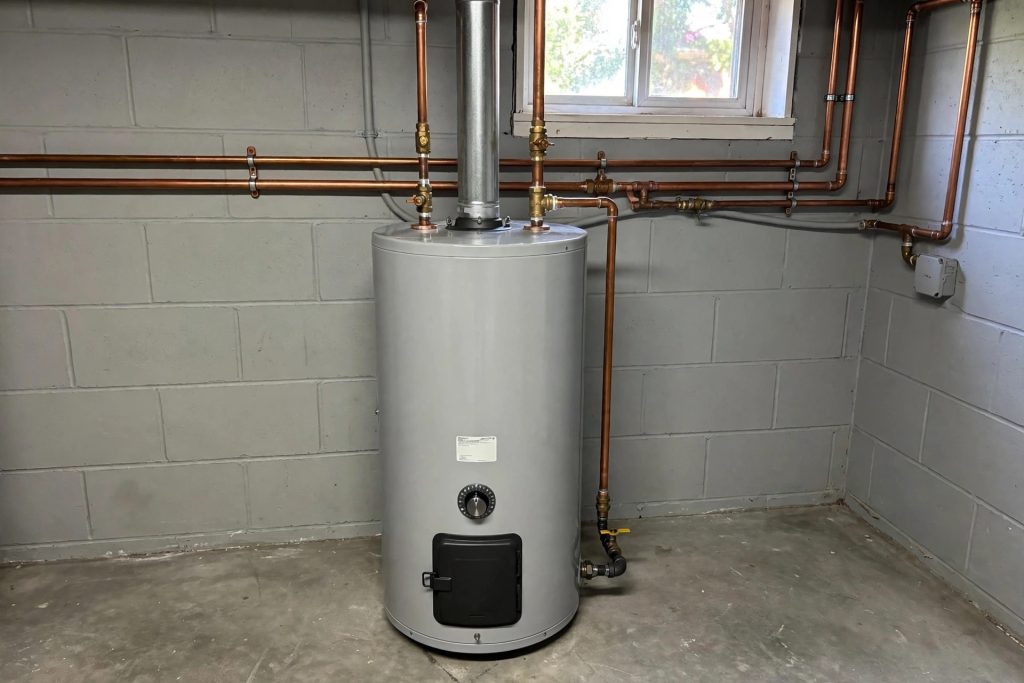
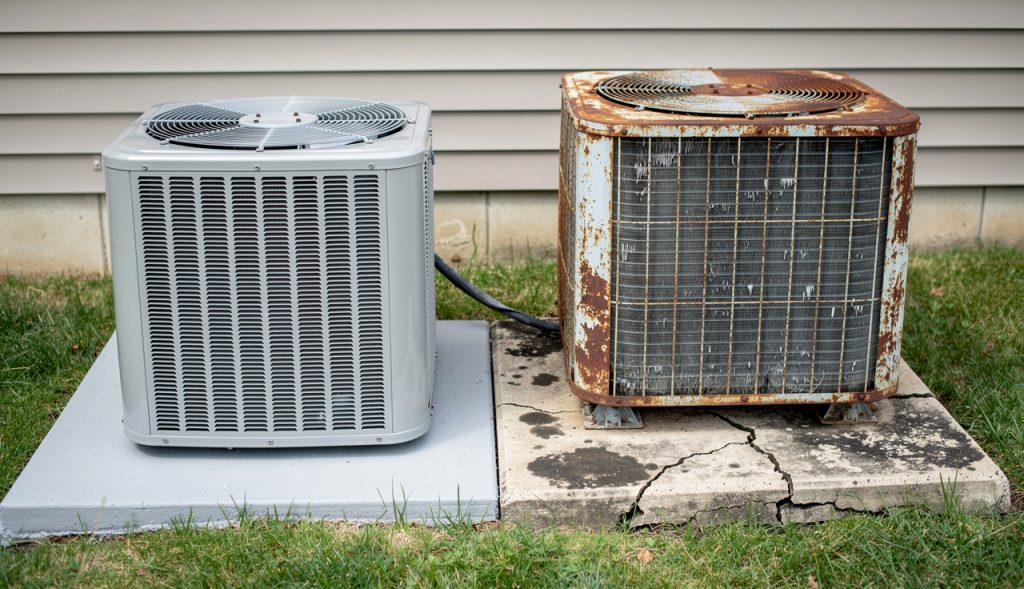
Before the math, look at the tank itself. Rust on the shell, corrosion at the fittings, crust where water has been dripping and drying for months — a tank that has lived wet and neglected ages twice as fast as the calendar says. The reverse is also true: a tank that has stayed dry, out of floods, with nothing dripping on it can be ten years old and look two, with some dust on it. That tank has earned its repairs. Judge the vessel in front of you, not just the date on the label — then run the numbers above.
The anode rod is the part most homeowners never think about. It is a sacrificial metal rod inside the tank that corrodes instead of the steel lining. If it is never changed, the tank often fails at 8 to 10 years. If it is changed every three to five years, some tanks reach 12 to 15. In St. Louis, hard water shortens that window. Sediment builds on the tank bottom, overheats the steel, and the tank fails from the bottom up. Flushing yearly helps but does not restore a spent anode. On hard city water, plan on 8 to 10 years, not 12.
Tank shell leaking: replace, period. A leak at a fitting, a T&P valve, or a drain valve can be repaired. A leak from the tank body or bottom — no sealant, epoxy, or tank liner works. The lining is gone.
Where the water comes from matters. Leaks at the top connections — on most residential tanks the inlet and outlet are on top; mobile-home tanks plumb from the side — can be fitting problems, and fittings can be fixed. Water that comes from inside the tank and out the bottom means the vessel itself has ruptured, cracked, or rusted through. That is not a repair conversation at all.
Young tank with a bad element or thermostat: almost always repair. Electric elements and thermostats are serviceable parts. An element runs $150 to $350 installed; a thermostat $150 to $300. A gas thermocouple or thermostat runs $150 to $350. Do not replace a four-year-old tank for a $200 part.
Safety faults: gas valve, T&P valve, or combustion problem gets fixed right regardless of age. A gas valve that leaks or will not shut off is a hazard. A T&P valve that will not open is a pressure bomb. If the tank is old and the gas valve is bad, you may still replace, but the safety fault is addressed either way.
On gas units, the number-one failure is the flame sensor — the part that proves the pilot is lit. When it gets dirty or tired, the pilot will not stay lit and the heater shuts down. A tech can often clean it and bring the heater back on the same visit. One honest caution: many brands lock the burner door down with security bolts that need special T20 to T25 bits, so getting to that sensor is professional territory on a lot of models, not a homeowner job.
STOP: If you smell gas around the water heater, do not touch the thermostat, light switches, or any electrical device. Get out of the house and call your gas utility from outside. A gas valve that will not shut off is not a DIY repair.
STOP: For electric units, shut off the breaker before touching any cover. Do not open the element panels with the power on. Mains voltage can kill you. If you are not sure which breaker controls the unit, stop and call a tech.
STOP: A failed T&P valve or a leaking tank can release water at 150°F or hotter. Do not stand in front of the discharge pipe or open any fitting. Scalding water can cause third-degree burns in seconds.
Old furnace, big repair quote? Run the numbers before you sign anything.
Open calculatorEstimate what a new AC, furnace or heat pump should actually cost installed, by size and efficiency.
Open calculatorPick the heater type, size, and how much install work is involved — get a 2026 installed price range before you call.
Open calculatorEnter your system size, current and new SEER ratings, and your electric rate — see the yearly savings and the payback in plain dollars.
Open calculatorEight common plumbing jobs priced two ways: what a pro charges installed, and what the parts cost if you do it yourself — with an honest verdict on each.
Open calculatorEnter the brand and serial number from the rating plate — most brands encode the manufacture year right in the serial.
Open calculatorRoom size, ceiling height, insulation, and sun — get the BTU size for a window unit or mini-split head, with the honest limits of any rule of thumb.
Open calculator