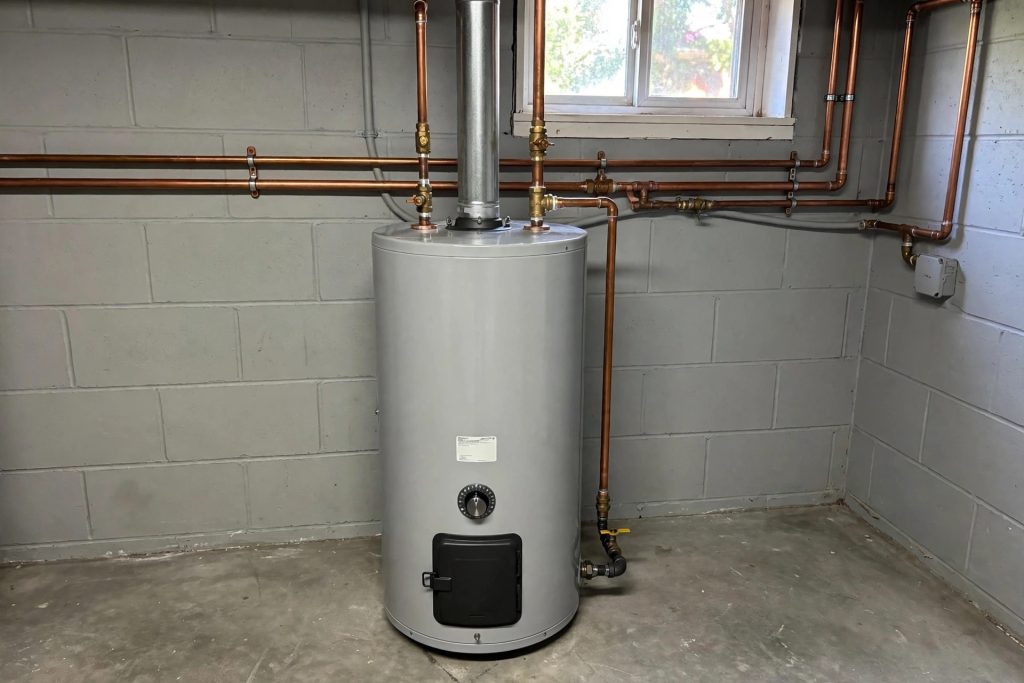
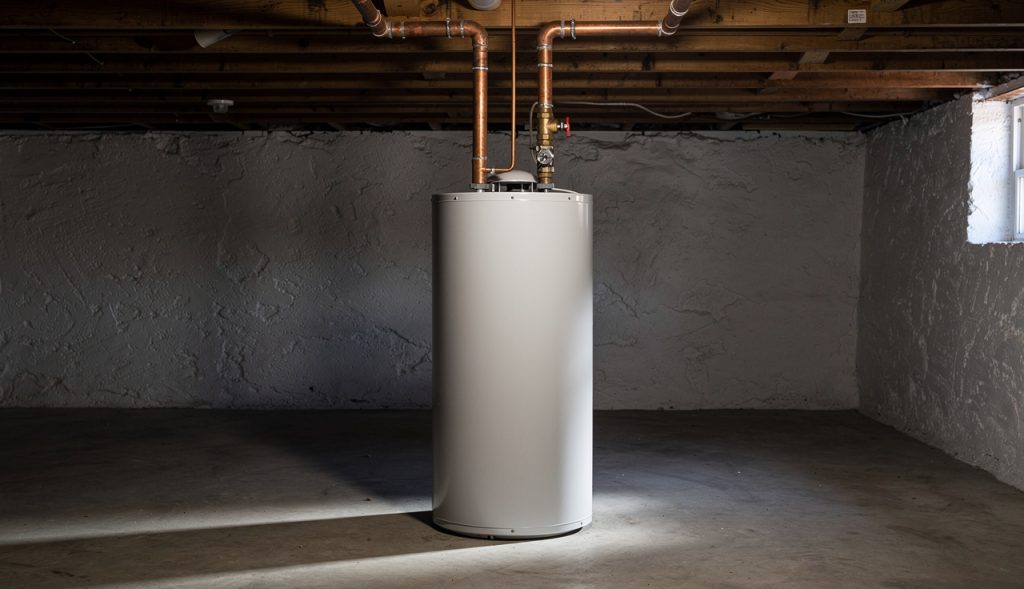
Water Heater: Repair or Replace? Calculator
Enter the age, the problem and the repair quote - get a straight repair-or-replace verdict.
Open calculator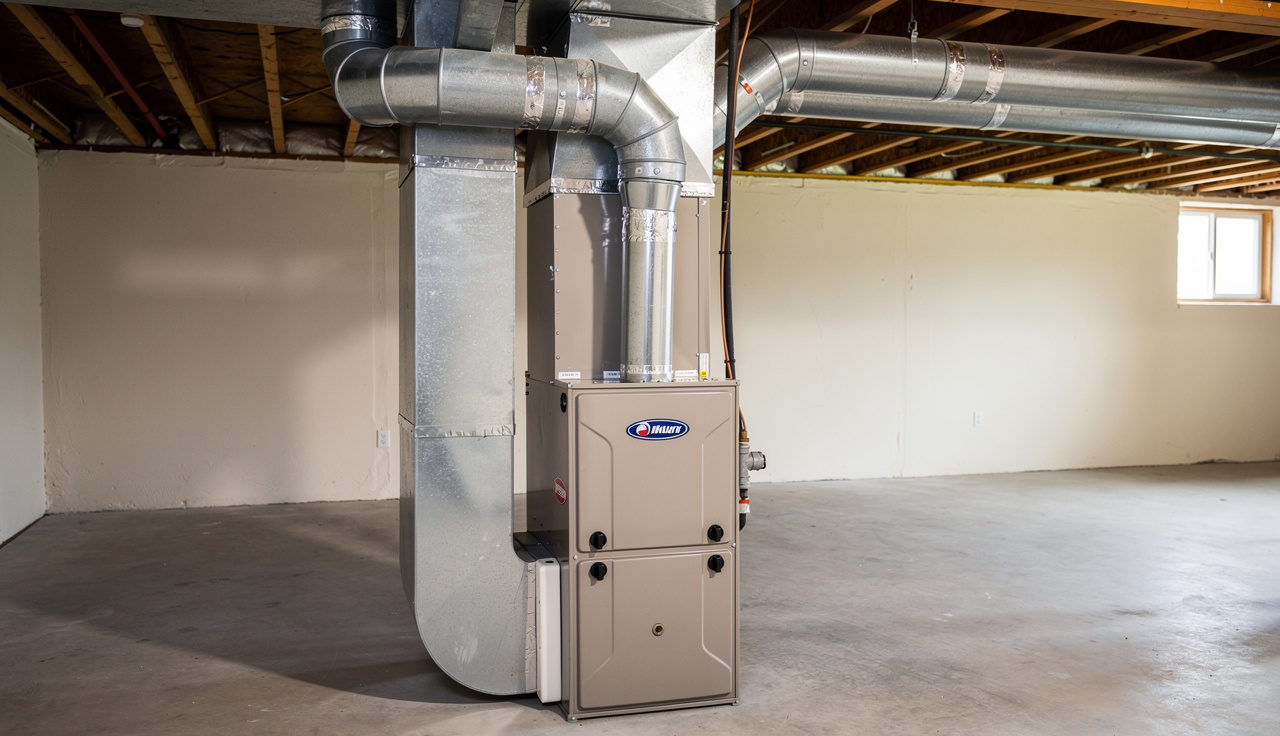
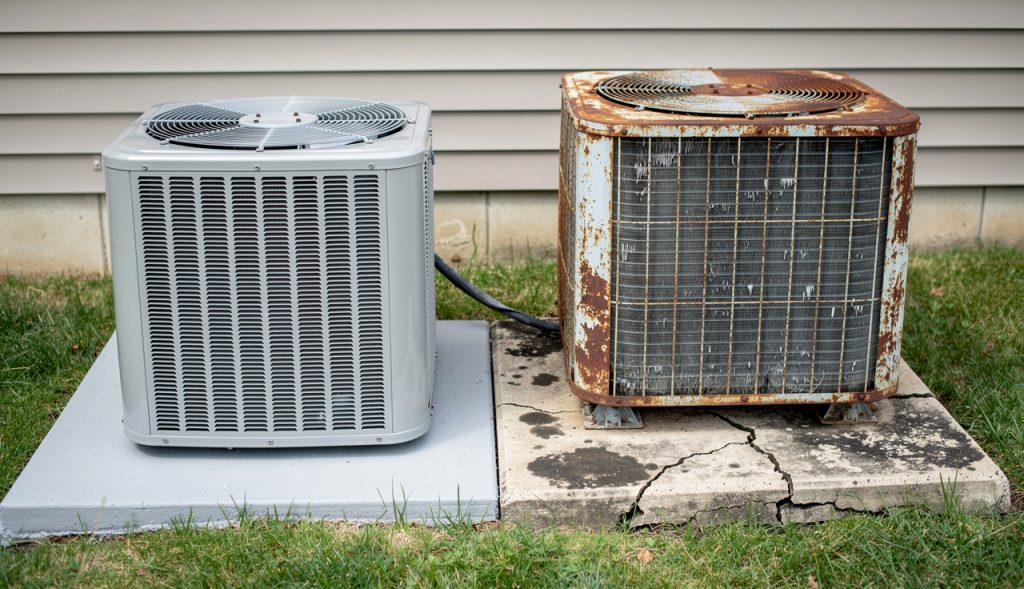
The estimator gives you a planning range for an installed HVAC system — not a bid. You input the system type: central AC, furnace, heat pump, or a full AC-and-furnace system. You input the size in tons, pick an efficiency tier, and tell it whether ductwork changes are part of the job. A St. Louis-area cost factor is already baked into the range it returns. It returns installed ranges for equipment, labor, permits, and common extras. What it cannot do is see inside your walls. It cannot tell you if your ductwork is undersized, if a flex run is crushed in the attic, if your electrical panel has space, or if the line set is buried behind finished drywall. Those are the things that turn a range into a real quote. Use this to compare quotes on the same scope, not to replace one.
What actually moves the price is not the logo on the truck. It is equipment tier and efficiency, ductwork condition, electrical capacity, permits, line set length, and the brand badge. Here is how each one works.
SEER2 is the updated Seasonal Energy Efficiency Ratio test standard. Higher is more efficient. The federal minimum for split AC in most of the U.S. is 14.3 SEER2; northern states are 13.4. A 16 SEER2 unit costs more upfront and saves some on cooling. The honest numbers: going from 14.3 to 16 SEER2 might cut cooling energy 8 to 10 percent. In St. Louis, that is often $50 to $150 per cooling season depending on the house, rates, and thermostat settings. Payback can be longer than the equipment lasts. A 20 SEER2 variable-speed system costs $2,000 to $4,000 more installed and saves more, but the payback is still long. Buy high efficiency for comfort and humidity control if you have the budget, not because the math will make you rich.
Equipment tier matters too. Builder-grade single-stage equipment is the cheapest. Two-stage costs $800 to $1,500 more installed. Variable-speed costs $2,000 to $4,000 more. Two-stage and variable-speed are quieter and hold humidity better. The dollar savings are small. Do not let anyone sell you variable-speed on energy savings alone.
Duct sealing runs $500 to $1,500. Partial duct replacement runs $1,500 to $5,000. A full duct system runs $6,000 to $12,000. A high-efficiency unit on leaky, undersized ducts will not deliver the rated efficiency. A quote that never looks in the attic or crawlspace is a red flag. In older St. Louis homes, ductwork is often the real story.
Electrical panel capacity: AC and heat pumps need dedicated breakers. Older panels may be full or still have fuses. A panel upgrade runs $1,500 to $3,500; a subpanel $800 to $1,800. If the quote does not mention electrical, it may show up later as a change order. Permits run $150 to $500 in the St. Louis area, more in some municipalities. A quote that skips permits pushes the risk to you. Line set length: most quotes include 25 feet. Extra copper runs $15 to $30 per foot, more if it goes through finished walls. A 50-foot run can add $500 to $1,000.
Some brands charge $500 to $1,500 more for the same basic equipment under a different badge. The install quality matters more than the logo. Ask what compressor, coil, and controls are inside. Get three quotes on the same spec: same tonnage, same efficiency tier, same duct scope, same permit. Price varies 30 to 50 percent for the same job. If one quote is much cheaper, find out what is missing.
A quote that skips the load calculation is guessing. Manual J is the room-by-room heat load calculation. Without it, the contractor is sizing from square footage or “same as the old one.” Oversized AC short-cycles, does not dehumidify well, and wears out faster. Undersized will not keep up on a 100°F day. Ask to see the Manual J or at least the block load. If they cannot produce it, get another quote.
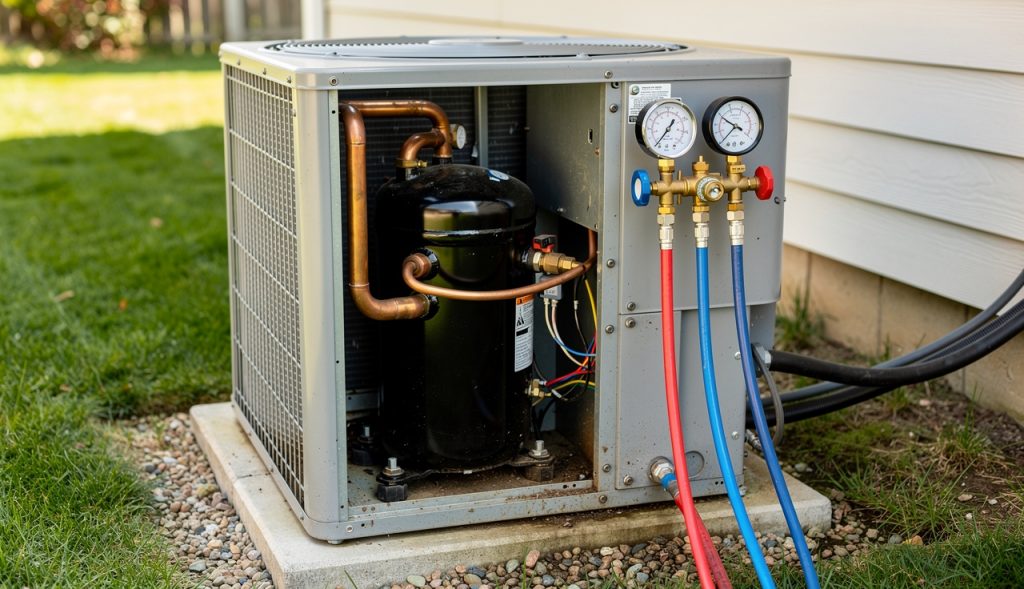
STOP: Refrigerant is under pressure. Do not loosen flare nuts, valve cores, or service port caps. Liquid refrigerant can freeze skin and displace oxygen in a small space. Only a licensed tech with gauges and recovery equipment should touch the sealed system.
STOP: The outdoor unit and air handler have mains voltage. Do not open the electrical compartment or pull a disconnect with the power on. Shut off the breaker at the panel before anyone services it. If you are not sure which breaker, stop.
Enter the age, the problem and the repair quote - get a straight repair-or-replace verdict.
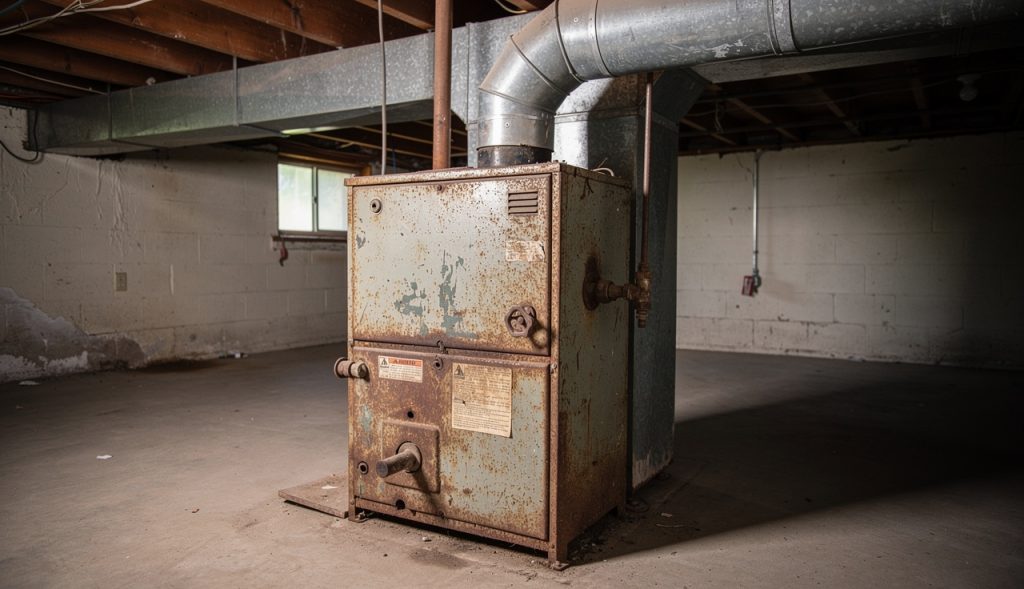
Open calculatorOld furnace, big repair quote? Run the numbers before you sign anything.
Open calculatorPick the heater type, size, and how much install work is involved — get a 2026 installed price range before you call.
Open calculatorEnter your system size, current and new SEER ratings, and your electric rate — see the yearly savings and the payback in plain dollars.
Open calculatorEight common plumbing jobs priced two ways: what a pro charges installed, and what the parts cost if you do it yourself — with an honest verdict on each.
Open calculatorEnter the brand and serial number from the rating plate — most brands encode the manufacture year right in the serial.
Open calculatorRoom size, ceiling height, insulation, and sun — get the BTU size for a window unit or mini-split head, with the honest limits of any rule of thumb.
Open calculator