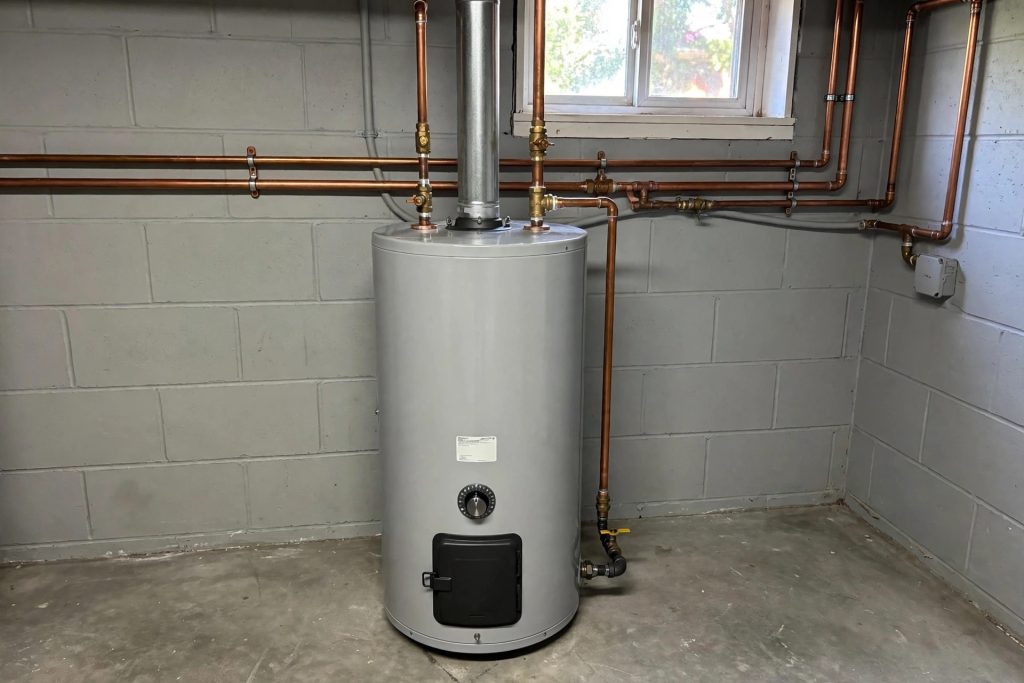
Water Heater: Repair or Replace? Calculator
Enter the age, the problem and the repair quote - get a straight repair-or-replace verdict.
Open calculator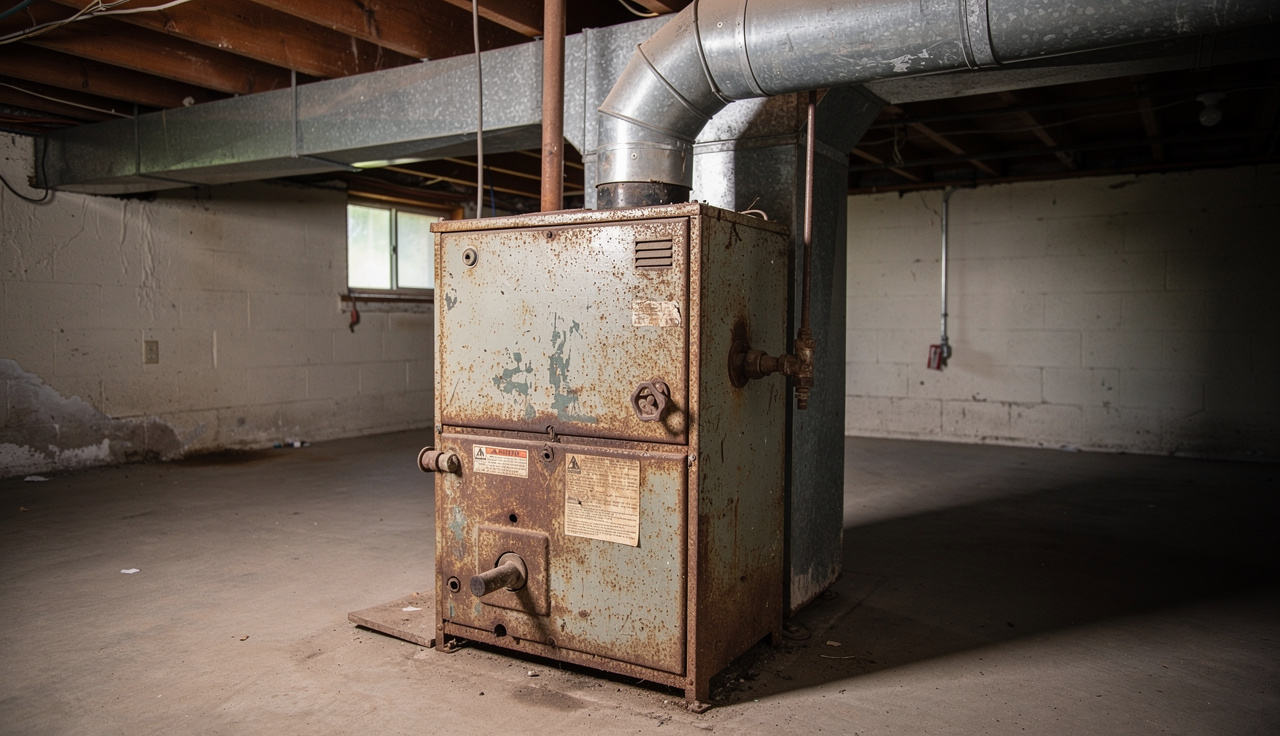
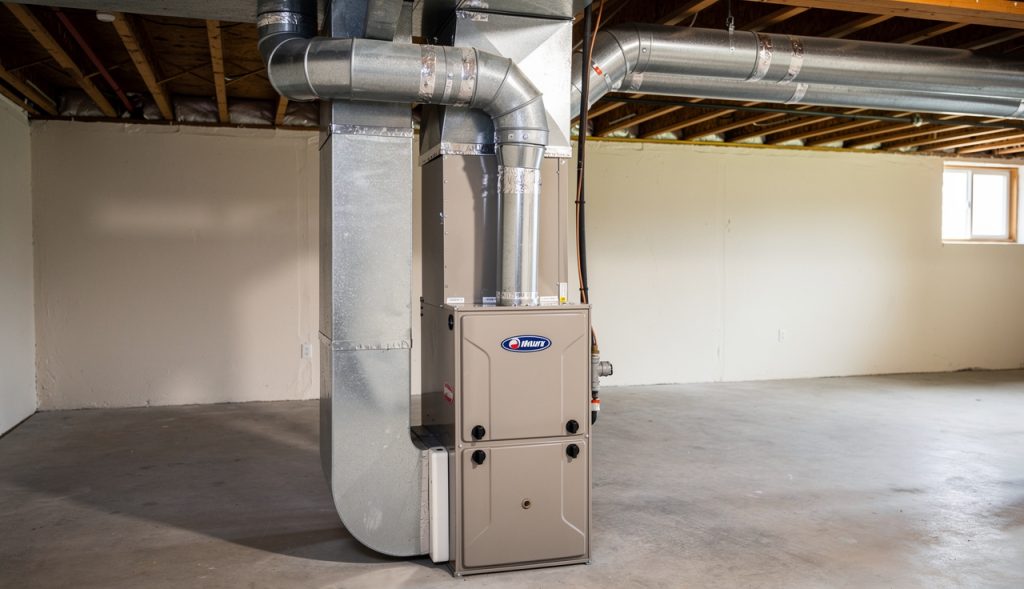
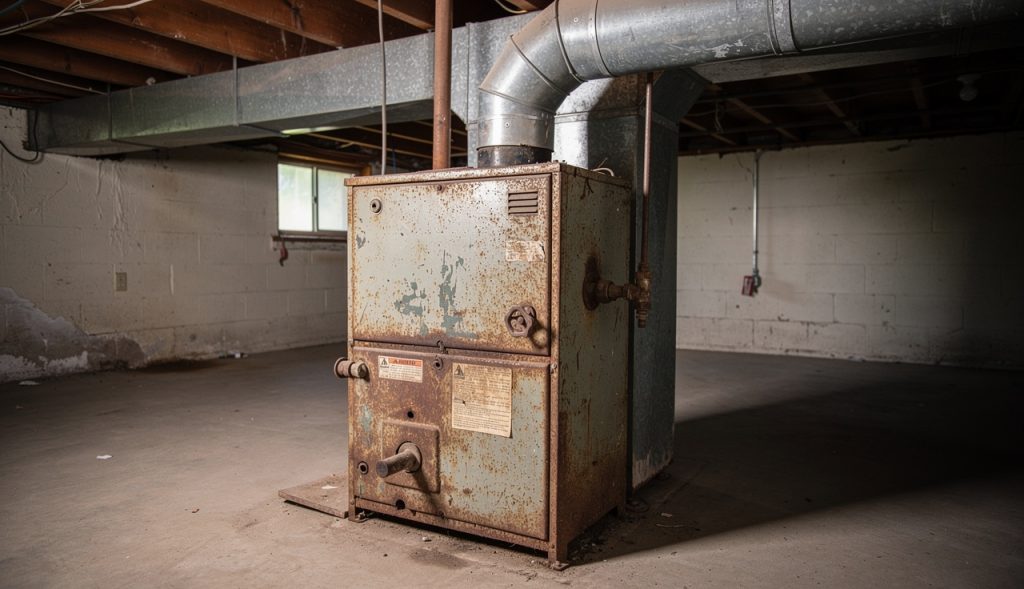
The calculator helps you decide whether to put money into a furnace or put it toward a new one. You input three numbers: the furnace’s age, the repair quote, and what a new furnace would cost installed. The heat exchanger question is handled in the sections below the calculator, because that one changes everything. It returns a repair-or-replace recommendation and flags the safety issues that override cost. It cannot inspect the heat exchanger or run a combustion analysis. Those require a tech on site with instruments. Use the range as a starting point for the conversation, not as a substitute for a combustion test.
A furnace has a realistic lifespan of 15 to 20 years. Some last longer with clean filters and good airflow; some die at 12 because they were oversized and short-cycled. The repairs that are worth it at almost any age are the small service parts: igniter ($150 to $400 installed), flame sensor ($120 to $300), and inducer motor ($400 to $900). Those parts fail from normal wear. Replacing them on an 18-year-old furnace with a sound heat exchanger can still be the right call. You are buying time, and the money is small compared with a new system.
More no-heat calls than any other begin the same way: the furnace calls for heat, tries three times, and locks out. It is not being stubborn. It tried to prove it had flame, failed three times, and shut down for safety. That pattern points straight at one small part.
The sequence runs like this: the igniter — a hot surface igniter that glows, or a spark igniter — fires first. The gas valve opens. The flame lights. Then the flame sensor has one job: prove the flame is really there and constant, so the furnace knows it is burning fuel, not leaking it. Prove flame, and the cycle continues. No proof, and it shuts off immediately and tries again. Three strikes and it locks out.
Flame sensors get dirty over time, and a dirty sensor cannot prove a healthy flame. The right repair is a new sensor — it is one of the cheapest parts on the furnace. The field fix, when the house needs heat now and the correct part is not on the truck, is to pull the sensor and clean it with sandpaper, then reinstall. It typically works immediately. With elderly people, small children, or anyone medically fragile in the house, that same-night fix matters more than the perfect repair order.
The igniter itself is the other half of this call. Hot surface igniters are fragile — they crack and sometimes shatter outright. A visibly cracked igniter is a replacement, full stop. One emergency note, professional-only: a tech working a freezing house at 2 a.m. has a manual way to bridge a broken igniter for a single heating cycle, lighting the burner by hand while the furnace runs its sequence. That is a trained-hands bridge to get a family through the night — it is not a homeowner procedure, and no guide on this site will walk an untrained person through hand-lighting a gas burner.
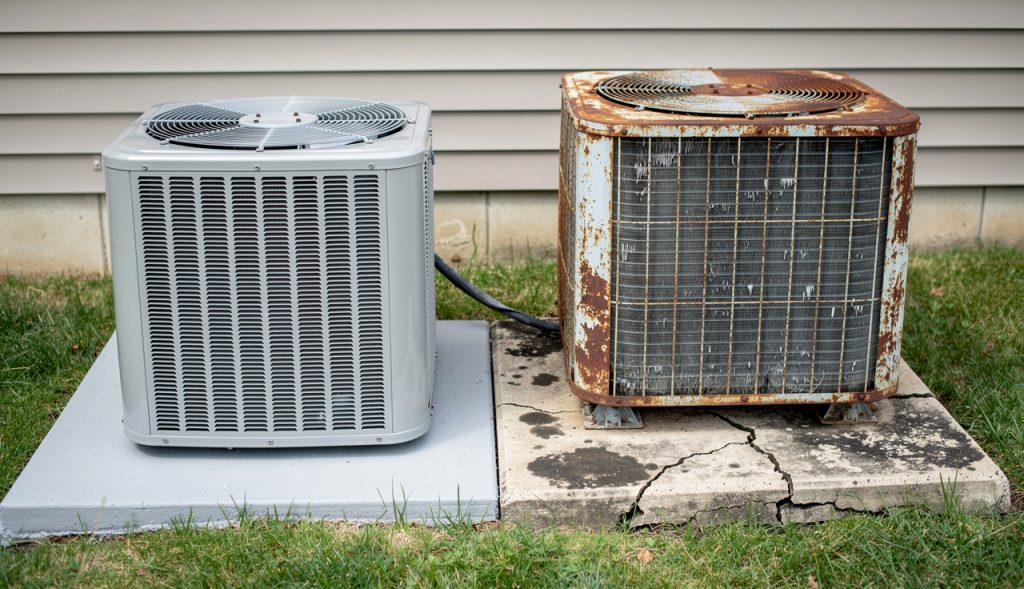
The repairs that change the math are the big ones. A blower motor on an old unit runs $500 to $1,200 installed. A control board runs $400 to $1,000. Two or three repairs in one season can stack to $1,500 or more. One repair on that list deserves an asterisk: the control board. Some board failures are not wear at all. All summer, the air conditioner’s condensate drain sits above or beside the furnace, and when that drain clogs — about once a year if nobody cleans it — the water backs up and pours down onto the board. The furnace then “dies” at the first cold snap, killed by the AC months earlier. The full drain-cleaning routine is on this site’s AC guide; it is the cheapest insurance a furnace ever gets.
When a 15-year-old furnace needs a $1,200 blower motor, and a new furnace installed runs $2,500 to $7,500 depending on size and efficiency, the math tilts toward replacement. That is not a sales pitch; it is arithmetic. The same repair on a five-year-old furnace is a different decision.
This is the one absolute: a cracked heat exchanger means replacement or shutdown. Carbon monoxide is not a negotiation. A cracked heat exchanger can let flue gas into the supply air. That is a health hazard, not a comfort issue. If a tech red-tags the furnace for a cracked heat exchanger, the furnace does not run again until it is replaced or the exchanger is replaced. Full stop.
What to do if a tech red-tags the furnace: get the written tag that states the reason. Ask to see the crack. Many techs use a borescope camera; ask for the photo or video. If they cannot show you, get a second opinion with a combustion analysis. A combustion analysis measures carbon monoxide in the flue gas, oxygen, and draft. It also checks static pressure. That data tells you whether the exchanger is actually compromised or whether the tech is selling. A red tag is a safety shutdown, not automatically a sales pitch — but verify. If the crack is real, do not run the furnace. Do not “just use it for a few days.” Carbon monoxide does not give you a warning before it hurts someone.
There are tests, and a good tech can run the first one in front of you. It starts inside the house: set the blower fan from AUTO to ON, everything else off, so the blower moves air through the exchanger without the burners firing. At the furnace, the tech holds a stick lighter’s flame at each heat exchanger inlet — the openings the burners fire into. If a crack or hole is passing air, the blower’s pressure disturbs that flame and it dances. Each inlet gets checked the same way. A steady flame everywhere is a good sign; a dancing flame at one inlet says that cell is breached.
The next step is a camera inspection, and it has real limits. A scope sees the front section of the exchanger well — and the front is where most cracks live, because that is where the flame hits hardest and the metal runs hottest. It does not see everything. The only absolute proof is removing the exchanger and inspecting the whole thing on a bench, and on an older furnace that teardown costs more in labor than the answer is worth: by the time you have paid to dismantle a 20- or 30-year-old furnace to find a small crack, you have spent replacement money to confirm a replacement.
That is the uncomfortable part of this claim, and it is worth saying plainly: on a furnace that is 15 to 20-plus years old, “cracked heat exchanger” is an easy thing for a sales-driven tech to say. He might be right — age, rust, and heat cycles do crack exchangers. It is simply expensive to prove or disprove, and on equipment that old, replacement is often the sensible route even when the claim was a guess. The flame test and a camera look are how you keep the claim honest before you sign.
STOP: If you smell gas or your CO alarm sounds, get everyone out of the house and call 911 or your gas utility from outside. Do not shut off the furnace yourself if it means staying inside. Do not flip light switches or use a phone inside the house.
STOP: Do not open the furnace cabinet to inspect the heat exchanger yourself. The gas valve, burners, and flue are in there, and the cabinet may have mains voltage. A cracked exchanger is not something to diagnose with a flashlight and a guess.
STOP: If you are working on the electrical side, shut off the breaker at the panel. The furnace has a disconnect switch, but the panel is the only lockout that counts. Mains voltage can kill you.
Enter the age, the problem and the repair quote - get a straight repair-or-replace verdict.
Open calculatorEstimate what a new AC, furnace or heat pump should actually cost installed, by size and efficiency.
Open calculatorPick the heater type, size, and how much install work is involved — get a 2026 installed price range before you call.
Open calculatorEnter your system size, current and new SEER ratings, and your electric rate — see the yearly savings and the payback in plain dollars.
Open calculatorEight common plumbing jobs priced two ways: what a pro charges installed, and what the parts cost if you do it yourself — with an honest verdict on each.
Open calculatorEnter the brand and serial number from the rating plate — most brands encode the manufacture year right in the serial.
Open calculatorRoom size, ceiling height, insulation, and sun — get the BTU size for a window unit or mini-split head, with the honest limits of any rule of thumb.
Open calculator